
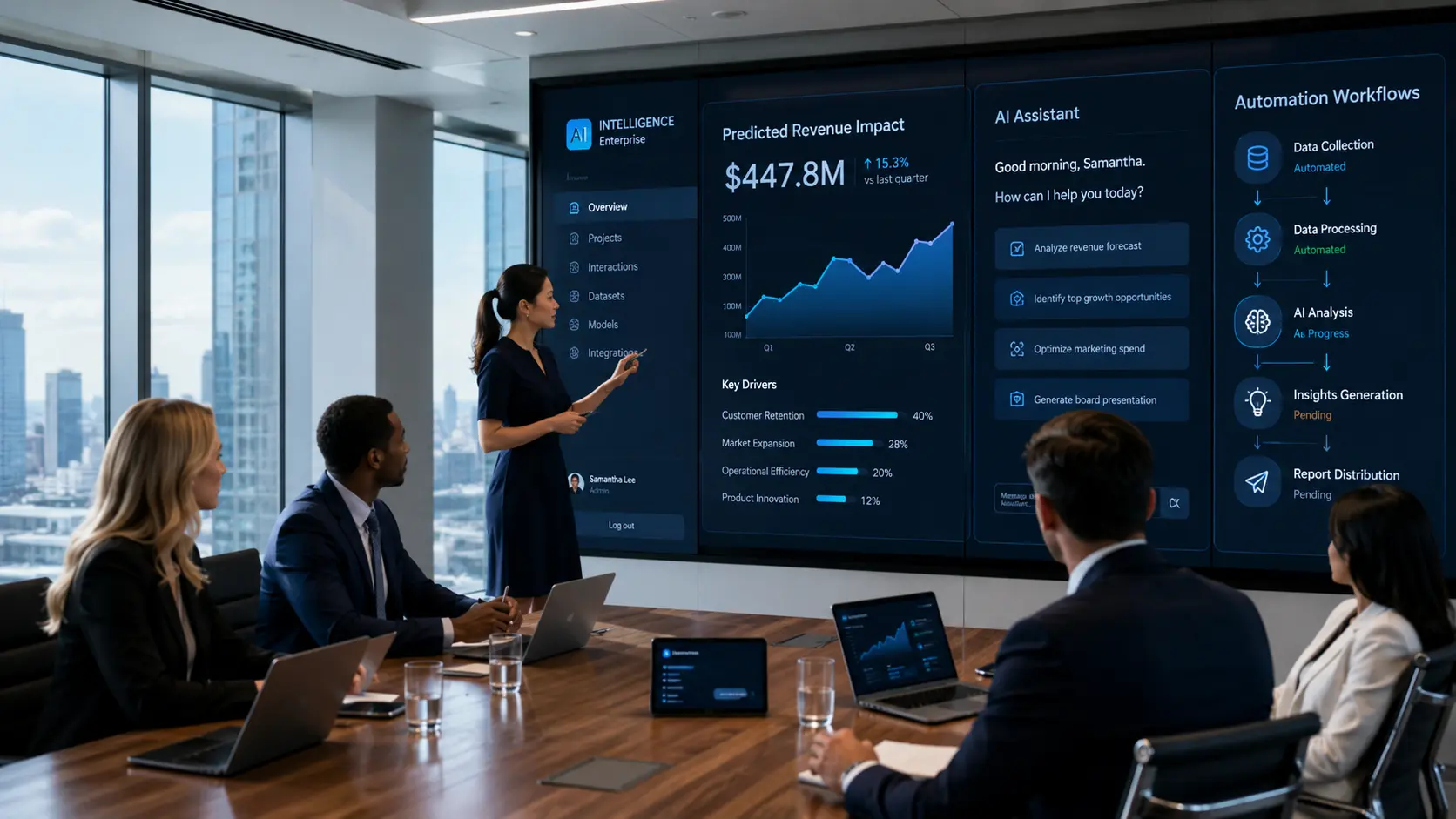
The race to dominate artificial intelligence has become one of the most important business battles of the decade. While dozens of technology companies are investing billions into AI infrastructure, enterprise software, and cloud computing, one organization stands at the center of the transformation: Microsoft.
In 2026, Microsoft is no longer simply a software company known for Windows and Office. It has evolved into an AI-powered enterprise technology ecosystem that influences how businesses operate, communicate, secure data, automate workflows, and make strategic decisions.
From enterprise AI assistants and cloud computing platforms to cybersecurity solutions and productivity software, Microsoft’s technology stack is becoming deeply embedded in modern digital transformation initiatives. The company’s aggressive AI strategy has positioned it as one of the most influential forces shaping the future of business software.
For CIOs, CTOs, IT managers, investors, and business leaders, understanding Microsoft’s AI roadmap is becoming increasingly important. The company’s decisions could redefine enterprise automation, cloud security, workplace productivity, and software development for years to come.
This article explores Microsoft’s position in 2026, its AI strategy, cybersecurity capabilities, financial performance, competitive landscape, and what business leaders should expect through 2030.
What Is Microsoft?
Microsoft is one of the world’s largest technology companies, providing software, cloud computing infrastructure, cybersecurity services, enterprise productivity tools, developer platforms, and artificial intelligence solutions.
Headquartered in Redmond, Washington, Microsoft serves businesses ranging from small startups to Fortune 500 enterprises.
Its major business segments include:
- Productivity and Business Processes
- Intelligent Cloud
- More Personal Computing
- Enterprise AI Platforms
- Cybersecurity Services
- Developer Tools
Today, Microsoft touches nearly every aspect of enterprise technology infrastructure.
Company Background and History
Founded in 1975 by Bill Gates and Paul Allen, Microsoft became a dominant force during the personal computer revolution.
Key milestones include:
| Year | Milestone |
|---|---|
| 1975 | Microsoft founded |
| 1985 | Windows launched |
| 1990s | Enterprise software expansion |
| 2001 | Xbox introduced |
| 2010 | Azure cloud growth begins |
| 2014 | Satya Nadella becomes CEO |
| 2020 | Cloud revenue surges |
| 2023 | AI transformation accelerates |
| 2026 | Enterprise AI becomes strategic focus |
Under CEO Satya Nadella, Microsoft shifted from a traditional software company to a cloud-first and AI-first organization.
This transformation has fueled significant revenue growth and strengthened Microsoft’s position against competitors such as Amazon, Google, Oracle, Salesforce, and IBM.
Microsoft: Company Snapshot
| Details | Information |
|---|---|
| Company Name | Microsoft Corporation |
| Founded | 1975 |
| Headquarters | Redmond, Washington, USA |
| Industry | Technology, Enterprise Software, Cloud Computing, Artificial Intelligence, Cybersecurity |
| Software Category | Enterprise Software, Cloud Platform, AI Solutions, Productivity Software, Business Applications |
| Founders | Bill Gates and Paul Allen |
| Primary Products | Microsoft Azure, Microsoft 365, Copilot AI, Dynamics 365, GitHub, Windows, Microsoft Security |
| Main Purpose | Helping individuals and organizations improve productivity, build applications, manage data, secure digital environments, and accelerate digital transformation through software and cloud technologies |
| Target Customers | Small businesses, startups, enterprises, government organizations, financial institutions, healthcare providers, developers, and global corporations |
| Core Problem It Solves | Helping organizations improve productivity, modernize outdated systems, adopt cloud computing, automate workflows, and integrate artificial intelligence into daily business operations |
| Technology Focus | Artificial Intelligence, Cloud Computing, Enterprise Software, Cybersecurity, Machine Learning, Developer Tools, Business Automation |
| Key Capabilities | AI-powered productivity tools, cloud infrastructure, enterprise applications, cybersecurity protection, software development platforms, data analytics, workflow automation |
| Primary Users | Business professionals, developers, IT teams, CIOs, CTOs, enterprise architects, cybersecurity teams, software engineers, organizations of all sizes |
| Deployment Options | Public Cloud, Hybrid Cloud, Private Enterprise Environments, SaaS-Based Deployment |
| Major Industries Served | Financial Services, Healthcare, Manufacturing, Retail, Government, Education, Telecommunications, Professional Services |
| Best Known For | Building one of the world’s largest enterprise technology ecosystems combining productivity software, cloud computing, AI, cybersecurity, and developer platforms |
| Business Value | Increased productivity, faster innovation, improved security, reduced operational complexity, better collaboration, scalable digital infrastructure |
Quick Summary
Microsoft is one of the world’s most influential technology companies, powering modern businesses through cloud computing, artificial intelligence, cybersecurity, enterprise software, and digital productivity solutions.
In 2026, Microsoft’s transformation from a traditional software company into an AI-first enterprise technology ecosystem has positioned it at the center of global digital transformation.
Through platforms like Azure, Microsoft 365, Dynamics 365, GitHub, and AI-powered Copilot solutions, the company helps organizations automate processes, improve productivity, modernize applications, and build secure digital environments.
For businesses looking to adopt AI, cloud technologies, and enterprise automation, Microsoft remains one of the most important technology platforms to evaluate.
Author’s View
Microsoft’s transformation from a traditional software company into an AI-powered enterprise technology leader represents one of the biggest shifts in the technology industry. The company’s biggest strength is not only its AI innovation but its ability to integrate artificial intelligence, cloud computing, cybersecurity, and enterprise software into one connected ecosystem.
For US businesses, this creates a major advantage because organizations need AI solutions that are secure, scalable, and practical—not just experimental technology. Microsoft’s AI strategy stands out because it brings intelligence directly into the tools businesses already use, including Microsoft 365, Azure, Dynamics 365, GitHub, and security platforms. However, companies should evaluate Microsoft’s solutions carefully. The platform offers powerful capabilities, but successful adoption requires proper planning, strong data governance, and a clear business strategy.
Microsoft’s future success will depend on how effectively it converts massive AI investments into measurable business results. With growing demand for AI automation, cloud infrastructure, and cybersecurity, Microsoft is positioned as one of the most influential technology companies shaping the future of enterprise software. For businesses planning their digital transformation journey, Microsoft remains one of the most important technology platforms to watch through 2030.

Products and Services Overview
Microsoft’s business ecosystem includes a wide range of enterprise solutions.
Productivity Software
Microsoft 365 includes:
- Word
- Excel
- PowerPoint
- Outlook
- Teams
- OneDrive
These tools remain foundational for millions of organizations worldwide.
Cloud Computing
Microsoft Azure provides:
- Cloud infrastructure
- Data storage
- Virtual machines
- AI services
- Analytics
- Security solutions
Azure has become one of the world’s largest cloud computing platforms.
Business Applications
Microsoft’s AI Dynamics 365 offers:
- CRM software
- ERP systems
- Customer service tools
- Sales automation
- Supply chain management
Developer Platforms
Microsoft supports software development through:
- GitHub
- Visual Studio
- Azure DevOps
- AI coding assistants
Cybersecurity Solutions
Microsoft Security products include:
- Endpoint protection
- Identity management
- Threat detection
- Compliance tools
- Cloud security
How Microsoft’s Technology Works
Microsoft’s AI ecosystem is increasingly integrated around three pillars:
Cloud Infrastructure
Azure acts as the foundation powering enterprise applications and AI workloads.
Data Platforms
Businesses use Microsoft technologies to collect, store, analyze, and secure data.
Artificial Intelligence
AI capabilities are embedded throughout Microsoft’s software portfolio.
Instead of offering AI as a standalone product, Microsoft integrates AI directly into business workflows.
This strategy allows organizations to enhance productivity without completely changing existing processes.
AI Strategy and Innovation Roadmap
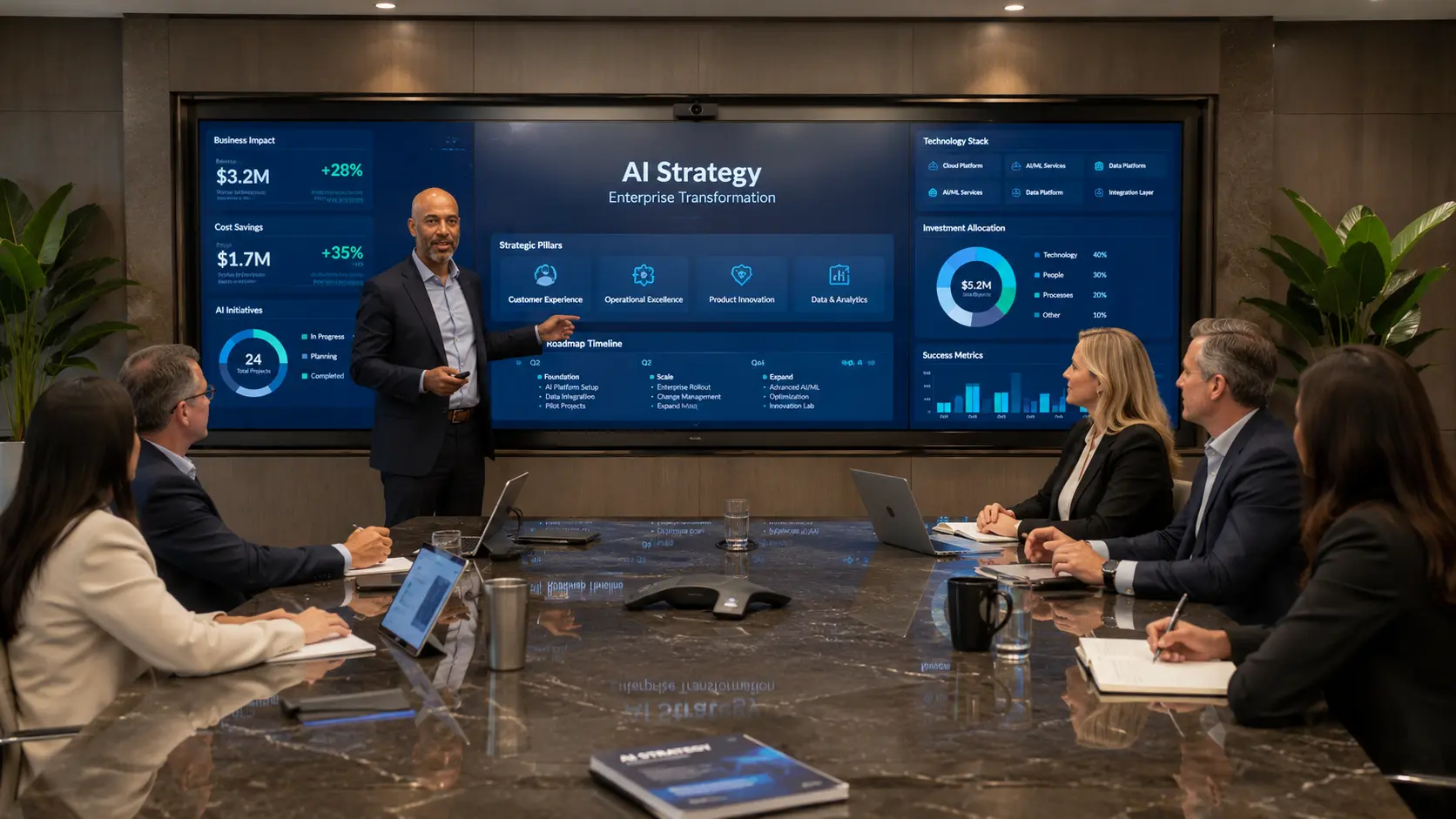
Microsoft’s AI strategy represents one of the most ambitious technology initiatives in modern business history.
The company is investing heavily in:
- Enterprise AI
- Generative AI
- AI productivity tools
- AI infrastructure
- AI-powered software development
- Business automation
AI Across the Enterprise
Microsoft is embedding AI into:
- Productivity applications
- Customer service systems
- Software development environments
- Security operations centers
- Data analytics platforms
This creates a unified AI experience across business functions.
AI Productivity Revolution
One of Microsoft’s strongest advantages is integrating AI directly into tools employees already use daily.
Potential benefits include:
- Automated reporting
- Content generation
- Data analysis
- Meeting summaries
- Workflow automation
- Knowledge management
This could significantly improve workforce productivity.
AI Infrastructure Leadership
Running large AI models requires massive computing power.
Microsoft’s AI continues expanding:
- AI data centers
- GPU infrastructure
- Cloud networking
- AI optimization systems
These investments strengthen Azure’s position as a leading cloud computing platform.

Cybersecurity and Data Protection Capabilities
As AI adoption increases, cybersecurity becomes more important than ever.
Microsoft has positioned security as a core component of its AI strategy.
Identity Protection
Organizations face increasing risks from:
- Credential theft
- Account compromise
- Insider threats
Microsoft’s AI provides identity-focused security solutions that help organizations secure user access.
Threat Detection
Modern cyberattacks move quickly.
AI-powered security systems can:
- Detect anomalies
- Monitor behavior patterns
- Identify threats earlier
- Reduce response times
Compliance Management
Businesses operating in regulated industries must comply with various frameworks.
Microsoft supports compliance requirements involving:
- Data governance
- Privacy regulations
- Risk management
- Audit readiness
Cloud Security
Cloud environments remain a major target for cybercriminals.
Microsoft offers:
- Security monitoring
- Threat intelligence
- Vulnerability management
- Cloud workload protection
These capabilities are increasingly valuable for enterprise customers.
Cloud Infrastructure and Enterprise Solutions
Cloud computing remains one of Microsoft’s most important growth engines.
Azure supports:
- Enterprise applications
- AI workloads
- Hybrid cloud deployments
- Data analytics
- Disaster recovery
Why Azure Matters
Businesses increasingly need:
- Scalability
- Reliability
- Security
- Global availability
Azure delivers these capabilities while integrating with Microsoft’s broader ecosystem.
Hybrid Cloud Advantage
Many enterprises cannot move all systems to the public cloud.
Microsoft’s AI hybrid approach allows organizations to combine:
- On-premises infrastructure
- Private cloud environments
- Public cloud services
This flexibility appeals to large enterprises and regulated industries.
Benefits for Businesses
Organizations adopting Microsoft’s ecosystem may experience several advantages.
Improved Productivity
AI-powered automation reduces repetitive tasks.
Employees can spend more time on strategic activities.
Reduced Complexity
Using a unified platform may reduce software fragmentation.
Enhanced Security
Integrated cybersecurity solutions can simplify security management.
Better Collaboration
Communication and collaboration tools support hybrid and remote work models.
Scalability
Organizations can scale resources based on changing business requirements.
Real-World Business Use Cases
Financial Services
Banks use Microsoft’s AI technologies for:
- Risk analysis
- Fraud detection
- Customer engagement
- Regulatory compliance
Healthcare
Healthcare organizations leverage Microsoft solutions for:
- Data management
- Patient communication
- Operational efficiency
Manufacturing
Manufacturers use AI and cloud computing to optimize:
- Supply chains
- Predictive maintenance
- Production workflows
Retail
Retail companies benefit from:
- Customer analytics
- Inventory optimization
- Personalized marketing
Professional Services
Consulting firms increasingly use AI productivity tools to improve client service delivery.
Pricing and Cost Considerations
Microsoft offers multiple pricing models depending on products and services.
| Category | Pricing Approach |
|---|---|
| Microsoft 365 | Per-user subscription |
| Azure | Consumption-based |
| Dynamics 365 | Module-based licensing |
| Security Products | User or workload pricing |
| AI Services | Usage-based pricing |
Organizations should evaluate:
- Total cost of ownership
- Licensing complexity
- Infrastructure requirements
- Security investments
- AI usage costs
Careful planning helps maximize return on investment.
Competitive Analysis
Microsoft operates in highly competitive markets.
| Competitor | Primary Strength |
|---|---|
| Amazon | Cloud infrastructure |
| AI research and data analytics | |
| Salesforce | CRM leadership |
| Oracle | Enterprise databases |
| IBM | Consulting and enterprise services |
| ServiceNow | Workflow automation |
Microsoft’s Competitive Advantages
- Massive enterprise customer base
- Integrated ecosystem
- Strong cybersecurity portfolio
- Global cloud infrastructure
- AI investments
- Developer community support
Areas of Competitive Pressure
- Cloud pricing competition
- Rapid AI innovation cycles
- Regulatory scrutiny
- Open-source alternatives
Strengths and Weaknesses
Strengths
Strong Enterprise Relationships
Microsoft has decades of enterprise trust.
Diverse Revenue Streams
Revenue comes from multiple business segments.
AI Leadership
Large-scale AI investments create competitive advantages.
Cybersecurity Expertise
Security remains a growing business opportunity.
Weaknesses
Complexity
Large product portfolios can create licensing and management challenges.
Regulatory Risks
Governments increasingly scrutinize large technology companies.
AI Cost Structure
Operating advanced AI systems requires significant infrastructure spending.
Competitive Pressure
Technology markets evolve rapidly.
Market Position in 2026
Microsoft’s AI enters 2026 from a position of strength.
Key market trends supporting growth include:
- Enterprise AI adoption
- Cloud migration
- Cybersecurity spending
- Digital transformation initiatives
- Business process automation
Organizations increasingly seek platforms that combine:
- AI
- Cloud computing
- Security
- Productivity software
Microsoft is one of the few companies capable of delivering all four at scale.
Financial Growth and Business Performance
Microsoft remains one of the most financially powerful technology companies globally.
Key strengths include:
- Strong recurring revenue
- High-margin software offerings
- Growing cloud business
- Expanding AI opportunities
Investors continue monitoring:
- Azure growth rates
- AI monetization
- Enterprise software adoption
- Security revenue expansion
The company’s financial stability allows continued investment in emerging technologies.
Future Predictions Through 2030
Several trends could shape Microsoft’s future.
AI Becomes Standard Software Infrastructure
AI functionality may become embedded into nearly every enterprise application.
Autonomous Workflows Expand
Organizations will increasingly automate business processes.
Cybersecurity Spending Accelerates
Growing threats will drive demand for advanced security platforms.
Enterprise Software Consolidation
Businesses may prefer integrated ecosystems over fragmented software stacks.
Cloud and AI Convergence
AI workloads will drive continued cloud infrastructure growth.
If these trends continue, Microsoft could become even more influential across enterprise technology markets.
Expert Opinion: Is Microsoft Worth Watching?
For business leaders, the answer is yes.
Microsoft sits at the intersection of several high-growth sectors:
- Artificial Intelligence
- Enterprise AI
- Cloud Computing
- Cybersecurity
- SaaS Platforms
- Digital Transformation
- Enterprise Automation
Its integrated strategy provides significant competitive advantages.
Organizations evaluating business software, cloud infrastructure, security platforms, or AI productivity solutions should closely monitor Microsoft’s roadmap.
Investors should also pay attention to how effectively Microsoft’s AI converts AI investments into long-term revenue growth.
The company’s ability to commercialize AI at enterprise scale may determine whether it becomes the defining business technology company of the next decade.

Frequently Asked Questions
Why is Microsoft important in 2026?
Microsoft is a leader in artificial intelligence, cloud computing, cybersecurity, and enterprise software, making it one of the most influential technology companies in the world.
What makes Microsoft’s AI strategy unique?
The company embeds AI directly into existing business workflows instead of offering isolated AI products.
Is Azure competitive with other cloud providers?
Yes. Azure remains one of the leading cloud computing platforms and competes directly with Amazon Web Services and Google Cloud.
How strong is Microsoft’s cybersecurity business?
Microsoft has become a major cybersecurity provider offering identity protection, threat detection, cloud security, and compliance solutions.
Can small businesses benefit from Microsoft’s AI tools?
Yes. Many Microsoft solutions are available through subscription models that make advanced AI capabilities accessible to organizations of different sizes.
Is Microsoft a good company for long-term investors to watch?
Many analysts consider Microsoft a key company due to its leadership in cloud computing, enterprise software, cybersecurity, and AI innovation.
Final Verdict
Microsoft’s AI strategy could fundamentally reshape the future of business software.
Unlike many competitors that focus on standalone AI tools, Microsoft is embedding artificial intelligence across productivity applications, cloud computing infrastructure, cybersecurity platforms, developer environments, and enterprise business systems.
This integrated approach creates powerful network effects that may strengthen Microsoft’s position for years to come.
For CIOs, CTOs, business owners, IT leaders, cybersecurity professionals, and technology investors, Microsoft remains one of the most important companies to watch in 2026.
The organization’s leadership in enterprise AI, cloud security, digital transformation, and business software places it at the center of the next phase of technological innovation.
If Microsoft’s AI vision succeeds, the company may not simply improve business software—it could redefine how modern businesses operate altogether.

SoftwareCompanyNearMe Editorial Team is dedicated to researching and publishing trusted content about U.S. software companies, SaaS platforms, artificial intelligence (AI), cloud computing, cybersecurity, and enterprise technology. Our goal is to help businesses, IT professionals, and software buyers make informed decisions through accurate, well-researched, and regularly updated technology guides, company reviews, and industry insights.