
Introduction
Few companies have transformed the American economy as profoundly as Amazon. What began in 1994 as an online bookstore has grown into one of the largest and most influential technology companies in the United States, serving hundreds of millions of customers while powering businesses, governments, startups, and developers around the world.
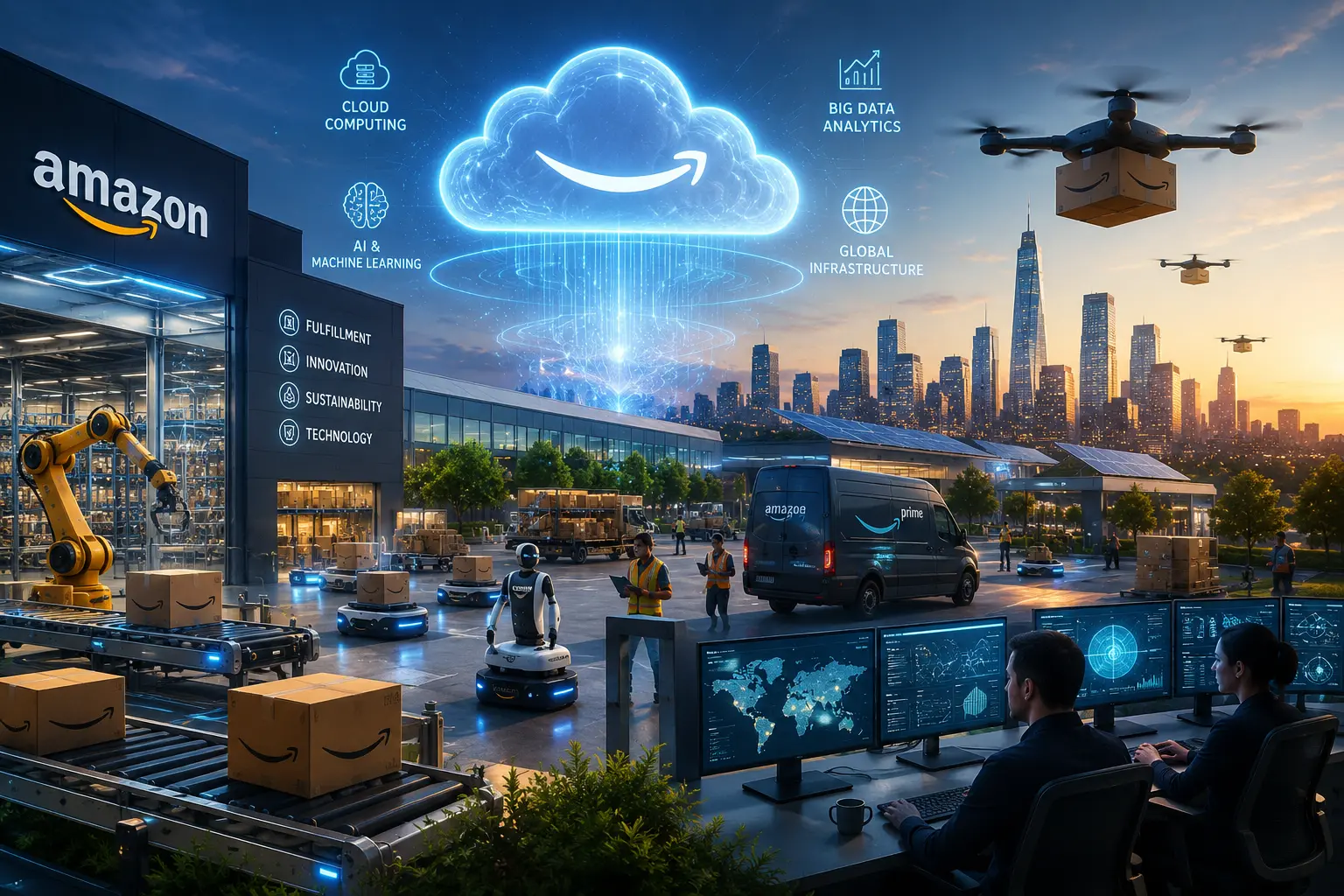
Today, Amazon is far more than an e-commerce platform. It operates one of the world’s largest cloud computing businesses through Amazon Web Services (AWS), leads innovation in artificial intelligence, powers digital advertising, manufactures smart devices, streams entertainment, delivers groceries, provides healthcare services, and manages one of the most advanced logistics networks ever built.
For millions of Americans, Amazon is part of everyday life. Consumers use Amazon to shop for household essentials, electronics, clothing, books, groceries, and entertainment. Businesses depend on AWS to host websites, build artificial intelligence applications, store critical data, and run enterprise software. Entrepreneurs rely on Amazon Marketplace to reach customers across the United States, while developers use AWS to build scalable applications that support everything from startups to Fortune 500 companies.
Amazon’s ability to combine technology, logistics, cloud computing, artificial intelligence, and customer-centric innovation has made it one of the most valuable companies in the world. Its ecosystem spans online retail, enterprise cloud services, digital advertising, streaming media, smart home technology, healthcare, robotics, and business productivity, giving it a unique position in both consumer and enterprise markets.
One of Amazon’s greatest strengths is its relentless focus on customer experience. The company has consistently invested in faster delivery, competitive pricing, personalized recommendations, seamless checkout experiences, and advanced fulfillment technologies. These innovations have reshaped consumer expectations across the retail industry and influenced how businesses approach digital commerce.
Beyond retail, Amazon Web Services has become the backbone of the modern internet. Thousands of U.S. businesses—including startups, Fortune 500 corporations, government agencies, healthcare providers, educational institutions, and financial organizations—rely on AWS for secure, scalable, and reliable cloud infrastructure. From artificial intelligence and machine learning to cybersecurity and big data analytics, AWS continues to drive digital transformation across industries.
Artificial intelligence is another major pillar of Amazon’s long-term strategy. The company integrates AI throughout its operations, from personalized shopping recommendations and warehouse robotics to cloud-based AI services, generative AI tools, and voice assistants. By embedding AI into both consumer experiences and enterprise platforms, Amazon helps organizations improve efficiency, automate workflows, and create new digital products.
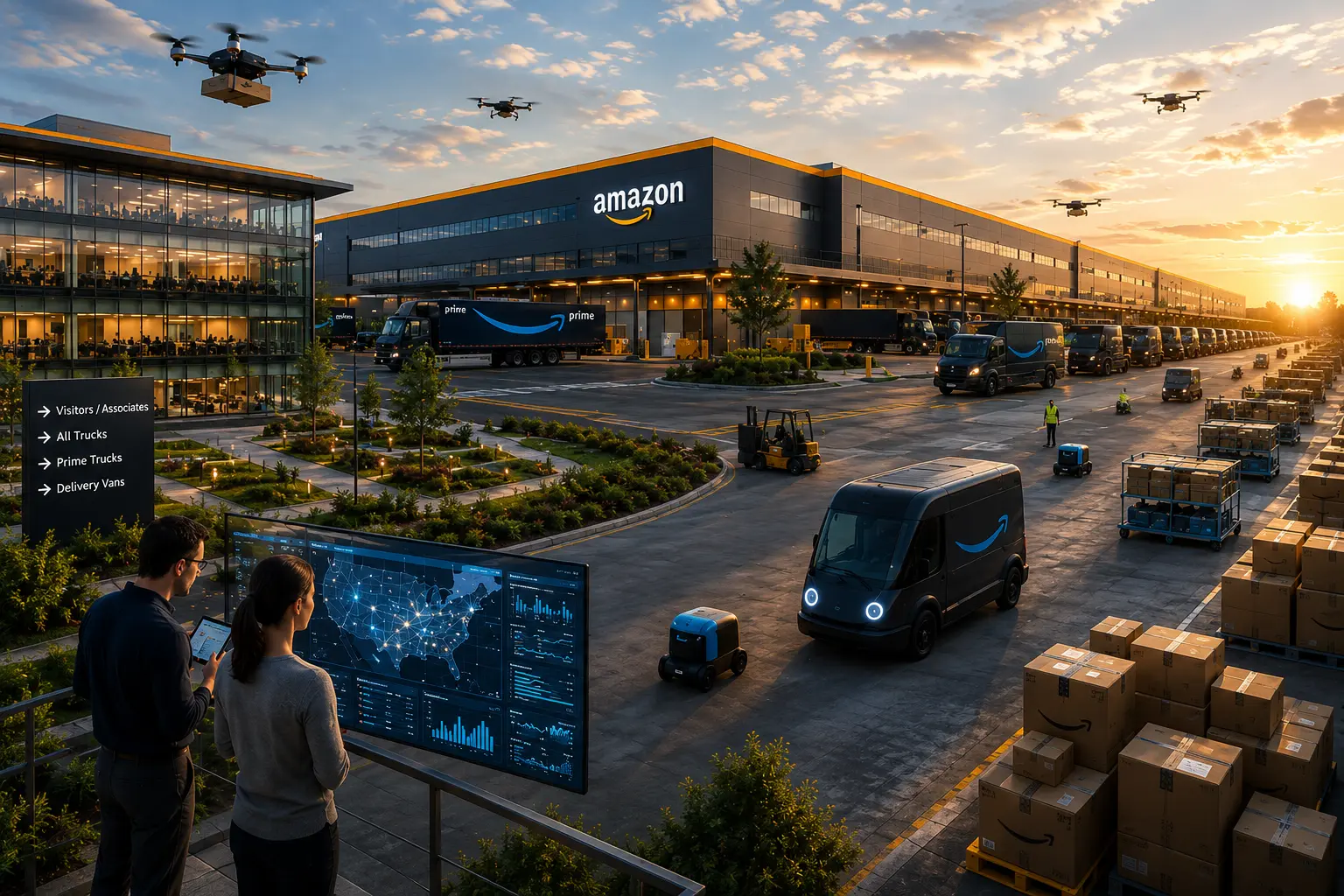
Amazon’s logistics network is equally impressive. With hundreds of fulfillment centers, delivery stations, air cargo hubs, and last-mile delivery partners across the United States, the company has built one of the most sophisticated supply chain systems in history. This infrastructure allows Amazon to deliver millions of packages daily while continually reducing delivery times and expanding same-day and next-day shipping options.
Innovation also extends to Amazon’s hardware portfolio. Devices such as Echo smart speakers, Fire TV, Kindle e-readers, Ring security systems, and other connected products create a broader ecosystem that integrates shopping, entertainment, communication, and smart home automation.
As Amazon continues investing in artificial intelligence, cloud computing, robotics, sustainability, healthcare, and digital commerce, its influence on the U.S. technology landscape is only expected to grow. Businesses evaluating cloud platforms, entrepreneurs exploring online marketplaces, investors following technology trends, and consumers seeking to understand one of America’s most influential companies all benefit from understanding Amazon’s evolving ecosystem.
Whether you’re a business owner considering AWS, an entrepreneur interested in Amazon Marketplace, a developer building cloud-native applications, or a consumer curious about Amazon’s future, this comprehensive guide explores the company’s history, business model, technology platforms, innovations, competitive advantages, and long-term strategy within the U.S. market.
Amazon at a Glance
Amazon has evolved from a small online bookstore into one of the world’s largest technology companies and a cornerstone of the U.S. digital economy. Headquartered in Seattle, Washington, Amazon operates across e-commerce, cloud computing, artificial intelligence, digital advertising, logistics, entertainment, healthcare, and consumer electronics.
Millions of Americans interact with Amazon every day—whether by shopping on Amazon.com, streaming movies on Prime Video, asking Alexa a question, reading on Kindle, or using websites and applications powered by Amazon Web Services (AWS).
Today, Amazon serves individuals, small businesses, enterprise organizations, government agencies, developers, and global brands. Its diverse portfolio has made it one of the most valuable companies in the world and a leader in technological innovation.
Amazon at a Glance
| Category | Details |
|---|---|
| Founded | 1994 |
| Founder | Jeff Bezos |
| Headquarters | Seattle, Washington, USA |
| Industry | Technology, E-commerce, Cloud Computing, Artificial Intelligence |
| CEO | Andy Jassy |
| Stock Exchange | NASDAQ |
| Primary Businesses | E-commerce, AWS, Advertising, Logistics, AI, Devices |
| Customers | Consumers, Businesses, Developers, Government Agencies |
Unlike companies focused on a single market, Amazon operates multiple high-growth businesses that reinforce one another. For example, revenue from e-commerce supports investments in logistics, while AWS funds innovation in cloud computing and artificial intelligence.
The History and Evolution of Amazon
Amazon’s journey reflects one of the most remarkable business transformations in American history. The company has consistently anticipated changes in consumer behavior and technology, expanding far beyond its original purpose.
The Beginning
Amazon was founded in 1994 by Jeff Bezos, who recognized the internet’s potential to transform retail. Initially launched as an online bookstore, Amazon offered customers access to a far larger catalog than traditional brick-and-mortar bookstores.
The company’s commitment to convenience, competitive pricing, and customer service quickly fueled rapid growth.
Expansion Beyond Books
By the late 1990s, Amazon expanded into categories such as:
- Electronics
- Music
- Movies
- Toys
- Home goods
- Apparel
- Sporting equipment
This diversification laid the foundation for Amazon’s evolution into a comprehensive online marketplace.
Launch of Amazon Marketplace
A major milestone came with the introduction of Amazon Marketplace, which allowed third-party sellers to list products alongside Amazon’s own inventory.
This transformed Amazon from a retailer into a platform connecting millions of buyers and sellers.
Today, Marketplace supports:
- Small businesses
- Entrepreneurs
- Global brands
- Independent creators
- Manufacturers
- Local retailers
For many U.S. businesses, Amazon Marketplace serves as a primary sales channel, enabling nationwide reach without building their own e-commerce infrastructure.
Birth of Amazon Prime
In 2005, Amazon introduced Amazon Prime, redefining customer expectations around online shopping.
Initially focused on fast shipping, Prime has expanded to include:
- Prime Video
- Prime Music
- Prime Reading
- Gaming benefits
- Exclusive shopping deals
- Cloud photo storage
Prime has become one of Amazon’s most successful customer loyalty programs, encouraging repeat purchases and deeper engagement with the Amazon ecosystem.
Amazon Web Services (AWS)
Perhaps Amazon’s most transformative innovation was the launch of Amazon Web Services.
Originally created to support Amazon’s own infrastructure, AWS evolved into a cloud computing platform that powers businesses worldwide.
Today, AWS provides:
- Cloud servers
- Storage
- Databases
- Artificial intelligence
- Machine learning
- Analytics
- Security
- Developer tools
From startups to Fortune 500 companies, AWS has become a foundational technology platform for modern digital businesses.
Expansion Through Innovation
Amazon continued diversifying into new industries by introducing:
- Kindle e-readers
- Echo smart speakers
- Alexa voice assistant
- Fire TV streaming devices
- Ring smart security products
- Amazon Fresh grocery services
- Amazon Pharmacy
- Amazon Business
- Digital advertising
- AI-powered services
Rather than relying solely on online retail, Amazon built a technology ecosystem that spans consumer and enterprise markets.
Amazon’s Business Model
Amazon operates one of the most diversified business models in the technology industry. Instead of depending on a single revenue source, the company generates income from multiple complementary businesses.
This diversification provides resilience during economic shifts while enabling Amazon to invest heavily in innovation.
E-commerce
Amazon’s online marketplace remains its most recognizable business.
Consumers can purchase:
- Electronics
- Clothing
- Home products
- Books
- Groceries
- Beauty products
- Office supplies
- Automotive accessories
- Pet supplies
- Health products
Amazon’s recommendation engine, personalized search, and streamlined checkout process help create a seamless shopping experience.
Third-Party Marketplace
Third-party sellers play a critical role in Amazon’s success.
Marketplace enables businesses to:
- Reach millions of customers
- Store inventory through Fulfillment by Amazon (FBA)
- Access Amazon’s logistics network
- Use advertising tools
- Scale nationally and internationally
For many entrepreneurs, Amazon Marketplace offers a lower barrier to entry than building an independent e-commerce operation.
Subscription Services
Recurring subscription revenue strengthens Amazon’s business.
Key subscription offerings include:
- Amazon Prime
- Kindle Unlimited
- Audible
- Prime Video channels
- Amazon Music
These services encourage long-term customer loyalty while generating predictable revenue.
Cloud Computing
AWS represents one of Amazon’s fastest-growing and most profitable businesses.
Cloud services include:
- Virtual servers
- Storage
- Networking
- Artificial intelligence
- Machine learning
- Serverless computing
- Database management
- Cybersecurity
AWS enables organizations to scale applications without investing in physical infrastructure.
Digital Advertising
Amazon has become one of the largest digital advertising companies in the United States.
Brands use Amazon Advertising to:
- Promote products
- Increase visibility
- Reach high-intent shoppers
- Measure campaign performance
Because advertisements appear where customers are already searching for products, Amazon offers advertisers strong opportunities for conversion.
Logistics Services
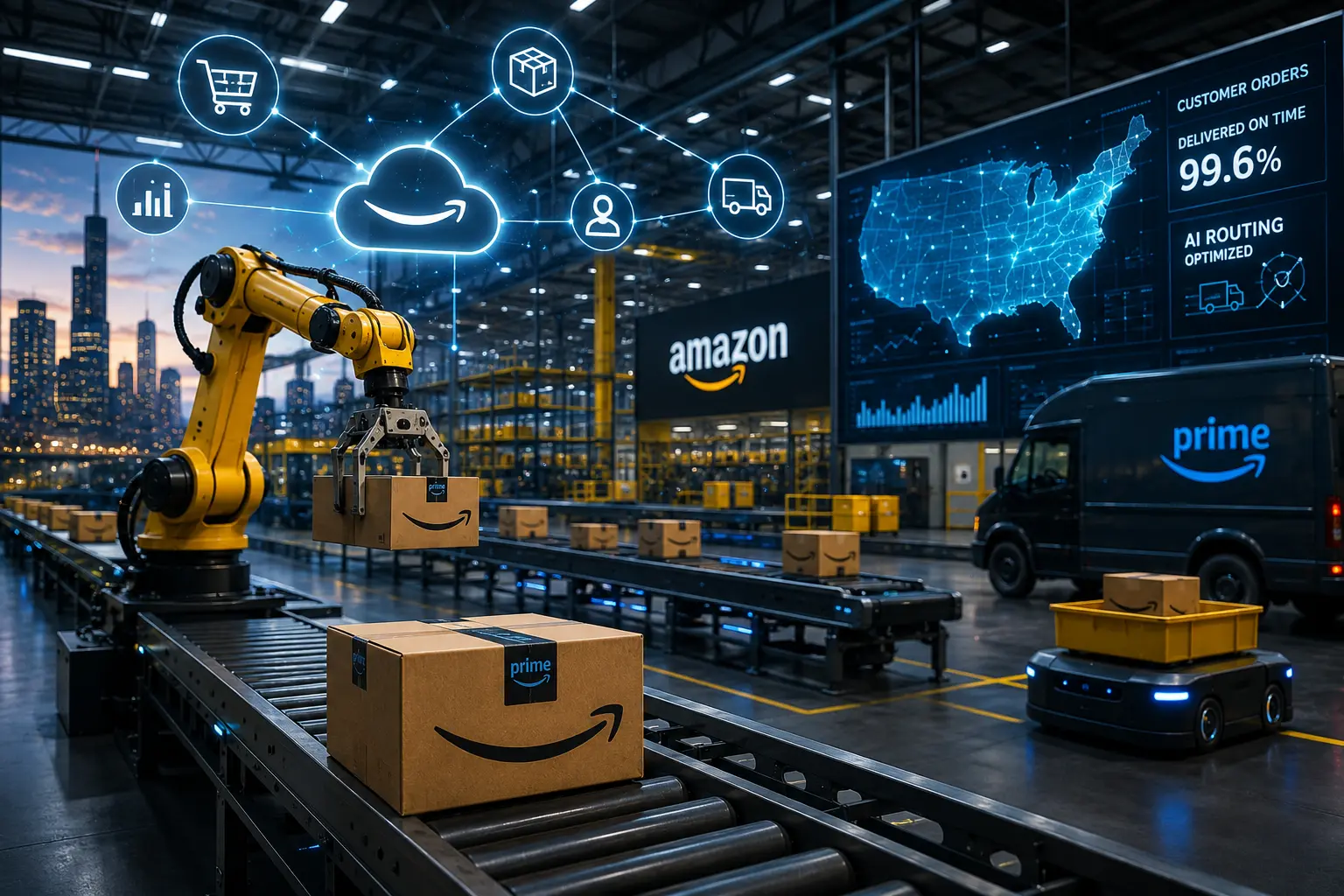
Amazon has invested billions of dollars in logistics infrastructure.
Its network includes:
- Fulfillment centers
- Sortation facilities
- Delivery stations
- Air cargo operations
- Delivery partners
- Robotics
- Last-mile delivery technology
This integrated logistics ecosystem helps Amazon control shipping speed, reliability, and customer experience.
Amazon Marketplace
Amazon Marketplace has transformed how businesses sell products online.
Rather than functioning only as a retailer, Amazon provides a platform where independent sellers can reach one of the largest online customer bases in the United States.
Today, millions of businesses use Marketplace to grow their brands and expand their customer reach.
How Amazon Marketplace Works
Sellers list products on Amazon’s platform while Amazon provides:
- Product discovery
- Payment processing
- Customer trust
- Marketing opportunities
- Fulfillment services
- Customer support tools
Businesses can choose to manage shipping themselves or use Fulfillment by Amazon (FBA), where Amazon stores inventory, packs orders, ships products, and handles many customer service tasks.
Benefits for Small Businesses
Marketplace helps entrepreneurs:
- Launch products quickly
- Reach nationwide customers
- Leverage Amazon’s fulfillment network
- Build brand awareness
- Access advanced analytics
- Scale operations without major infrastructure investments
Many U.S.-based small businesses have grown into nationally recognized brands by leveraging Amazon’s marketplace and logistics capabilities.
Challenges Sellers Should Consider
While Marketplace offers significant opportunities, sellers also face challenges such as:
- Intense competition
- Marketplace fees
- Pricing pressure
- Inventory management
- Advertising costs
- Compliance with Amazon’s policies
Successful sellers often combine strong product differentiation with effective inventory planning, customer service, and advertising strategies.
Why Amazon Is One of America’s Most Influential Companies
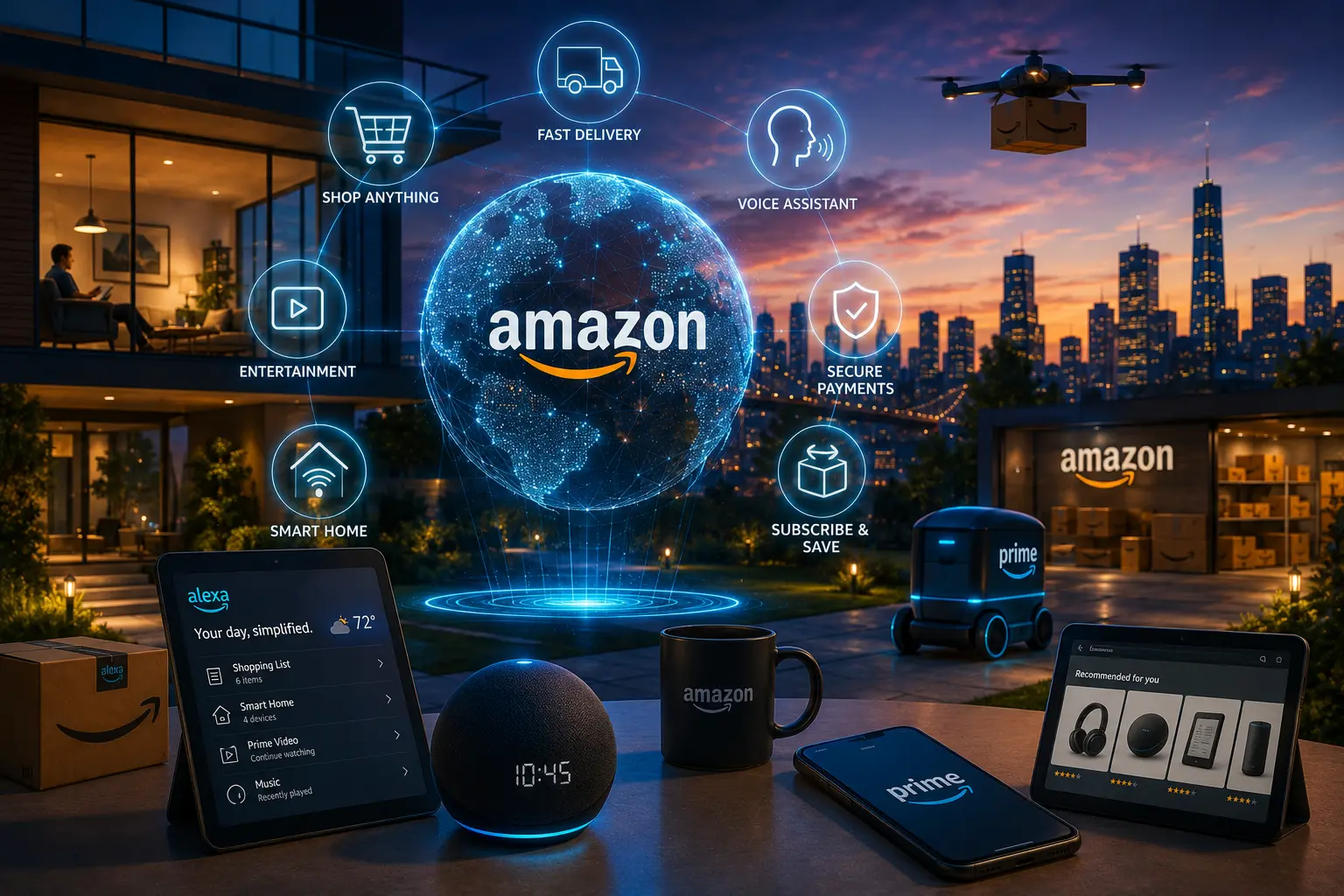
Amazon’s influence extends far beyond online shopping. It has reshaped industries ranging from cloud computing and logistics to digital advertising, artificial intelligence, and smart home technology.
Its customer-centric philosophy has set new standards for speed, convenience, and innovation, influencing how businesses across the United States operate and compete.
Several factors distinguish Amazon from many of its competitors:
- Customer Obsession: Decisions are often guided by long-term customer value rather than short-term gains.
- Continuous Innovation: Amazon invests heavily in emerging technologies, including AI, robotics, cloud computing, and automation.
- Integrated Ecosystem: Services such as Prime, AWS, Marketplace, Alexa, and Kindle reinforce one another, creating a seamless user experience.
- Scalable Infrastructure: Its logistics network and cloud platform enable Amazon to serve millions of customers and businesses reliably.
- Enterprise Leadership: Through AWS and Amazon Business, the company supports startups, large enterprises, and public sector organizations alike.
As digital commerce, artificial intelligence, and cloud computing continue to evolve, Amazon remains one of the most influential companies shaping the future of technology and business in the United States.
Amazon Web Services (AWS): The Cloud Platform Powering the Digital World
While Amazon is widely recognized for online shopping, Amazon Web Services (AWS) has become one of its most influential and profitable businesses. Launched in 2006, AWS pioneered the modern cloud computing industry and continues to serve millions of customers worldwide, including startups, Fortune 500 companies, government agencies, healthcare organizations, educational institutions, and nonprofits.
Today, AWS provides a comprehensive portfolio of cloud services that help organizations build applications, store data, deploy artificial intelligence, and scale their operations without investing in expensive on-premises infrastructure.
Core AWS Services
AWS offers hundreds of cloud services, with some of the most widely used including:
- Amazon EC2 (Elastic Compute Cloud) for scalable virtual servers.
- Amazon S3 (Simple Storage Service) for secure cloud storage.
- Amazon RDS for managed relational databases.
- Amazon DynamoDB for high-performance NoSQL databases.
- AWS Lambda for serverless computing.
- Amazon SageMaker for machine learning model development and deployment.
- Amazon CloudFront for fast content delivery.
- AWS Identity and Access Management (IAM) for security and access control.
- Amazon Bedrock for building generative AI applications using foundation models.
- Amazon Redshift for enterprise-scale data warehousing and analytics.
These services enable businesses to innovate faster while reducing infrastructure management overhead.
Why Businesses Choose AWS
Organizations adopt AWS because it offers:
- Exceptional scalability
- Global infrastructure
- Enterprise-grade security
- High availability
- Flexible pricing models
- Extensive developer tools
- Advanced AI and machine learning services
- Broad compliance certifications
Whether a startup is launching its first application or a multinational enterprise is migrating thousands of workloads, AWS provides the flexibility to support virtually any scale.
Amazon Prime: More Than Just Fast Shipping
Introduced in 2005, Amazon Prime has grown into one of the most successful subscription programs in the world. What started as a fast-shipping membership now offers a wide range of digital and physical benefits that encourage long-term customer loyalty.
Prime Membership Benefits
Amazon Prime includes:
- Free same-day, one-day, and two-day shipping on eligible items.
- Access to Prime Video, featuring movies, TV shows, and original content.
- Amazon Music Prime for streaming millions of songs.
- Prime Reading with access to eBooks and magazines.
- Amazon Photos for secure cloud photo storage.
- Exclusive shopping events and member-only discounts.
- Early access to select deals.
- Gaming benefits through Prime Gaming.
Prime’s combination of convenience, entertainment, and value has made it a central part of Amazon’s ecosystem for millions of U.S. households.
How Prime Supports Amazon’s Growth
Prime encourages:
- Increased purchase frequency.
- Higher customer retention.
- Greater engagement across Amazon’s services.
- Cross-selling opportunities between shopping, streaming, and smart devices.
This ecosystem approach strengthens customer relationships while driving long-term revenue.
Amazon Devices and Smart Home Ecosystem
Amazon has expanded beyond software and e-commerce to create a family of connected devices that integrate seamlessly with its digital services.
Amazon Echo
Echo smart speakers are powered by Alexa, Amazon’s voice assistant.
Users can:
- Control smart home devices.
- Play music.
- Set reminders and alarms.
- Ask questions.
- Shop on Amazon.
- Control compatible appliances.
- Manage daily routines.
Kindle
Kindle remains one of the most popular e-readers, offering:
- Glare-free displays.
- Long battery life.
- Adjustable lighting.
- Access to millions of eBooks.
- Seamless integration with Kindle Unlimited.
Fire TV
Fire TV devices provide access to:
- Streaming apps.
- Live TV services.
- Voice search through Alexa.
- Gaming.
- Smart home controls.
Ring
Ring products help homeowners monitor and secure their properties with:
- Video doorbells.
- Security cameras.
- Motion detection.
- Two-way communication.
- Mobile alerts.
Together, these devices create an interconnected ecosystem that extends Amazon’s presence into homes across the United States.
Amazon’s Artificial Intelligence Strategy
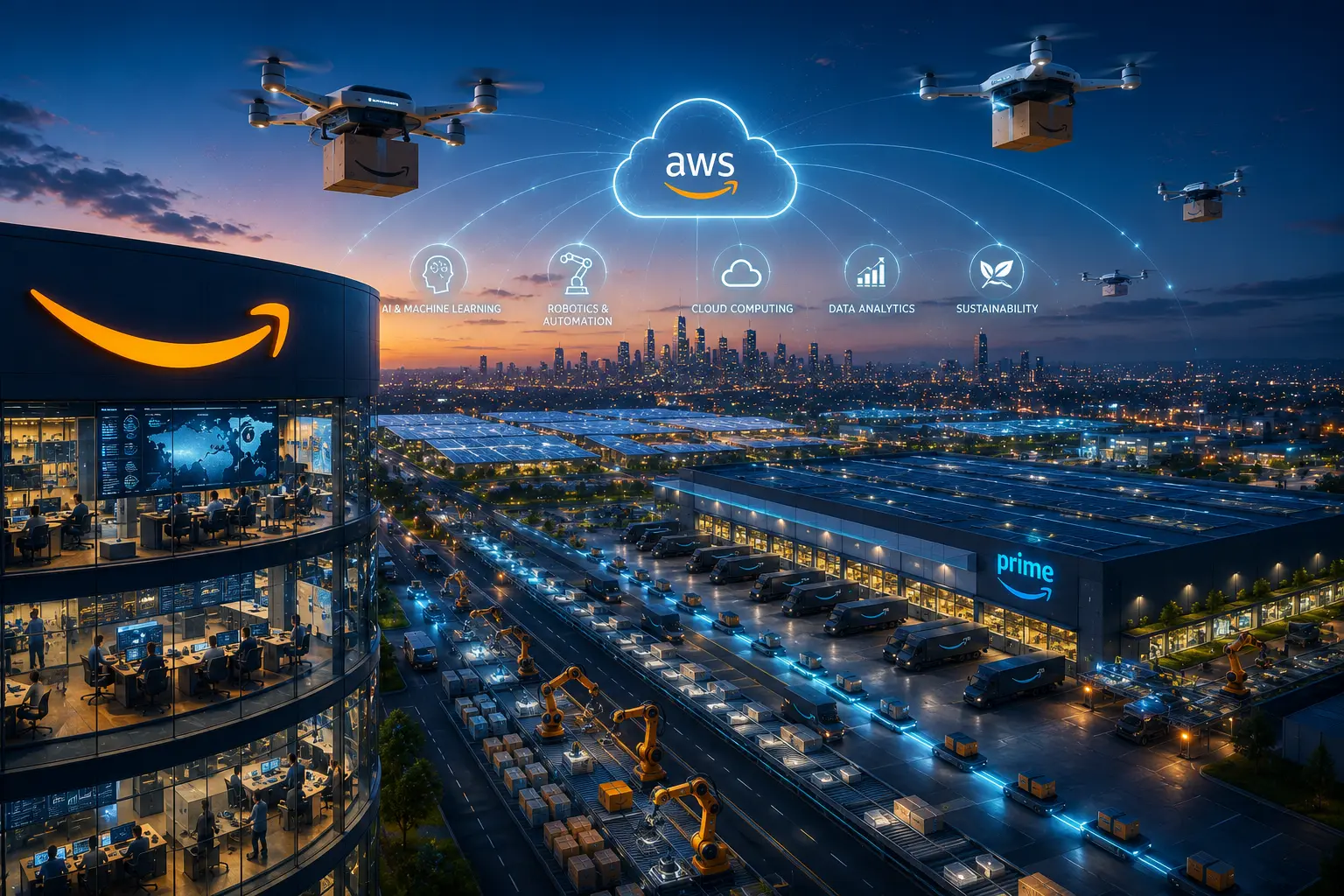
Artificial intelligence is deeply integrated into Amazon’s operations, products, and cloud services. Rather than existing as a standalone offering, AI enhances customer experiences, improves business efficiency, and supports enterprise innovation.
AI in Retail
Amazon uses AI to:
- Personalize product recommendations.
- Improve search results.
- Optimize inventory management.
- Forecast demand.
- Detect fraudulent transactions.
- Enhance customer support.
These capabilities help create faster, more relevant shopping experiences.
AI in AWS
AWS provides businesses with advanced AI tools, including:
- Machine learning services.
- Generative AI platforms.
- Natural language processing.
- Computer vision.
- Speech recognition.
- Predictive analytics.
Developers can build intelligent applications without creating AI infrastructure from scratch.
Alexa
Alexa demonstrates Amazon’s long-term investment in conversational AI.
The voice assistant supports:
- Smart home automation.
- Information retrieval.
- Entertainment.
- Productivity.
- Shopping assistance.
As generative AI evolves, Amazon continues enhancing Alexa’s conversational abilities and personalization features.
Amazon Advertising
Amazon has become one of the largest digital advertising platforms in the United States, competing with major online advertising providers.
Advertising Solutions
Businesses can promote products using:
- Sponsored Products.
- Sponsored Brands.
- Sponsored Display ads.
- Video advertising.
- Amazon DSP (Demand-Side Platform).
- Streaming TV advertising.
Why Advertisers Choose Amazon
Unlike traditional advertising platforms, Amazon reaches consumers when they are actively searching for products to purchase.
Benefits include:
- High purchase intent.
- Detailed shopping insights.
- Advanced audience targeting.
- Measurable campaign performance.
- Integration with Marketplace.
For brands selling products online, Amazon Advertising offers an effective way to increase visibility and drive sales.
Amazon Logistics and Fulfillment Network
Amazon’s logistics infrastructure is one of the company’s greatest competitive advantages.
Its network includes:
- Fulfillment centers.
- Sortation centers.
- Delivery stations.
- Air cargo operations.
- Ocean freight capabilities.
- Delivery Service Partners (DSPs).
- Last-mile delivery technologies.
Fulfillment by Amazon (FBA)
FBA allows sellers to store inventory in Amazon warehouses.
Amazon then manages:
- Storage.
- Packaging.
- Shipping.
- Customer service.
- Returns processing.
This enables businesses to scale efficiently while benefiting from Amazon’s logistics expertise.
Robotics and Automation
Amazon uses advanced robotics throughout its fulfillment centers to:
- Move inventory.
- Optimize warehouse layouts.
- Reduce processing times.
- Improve order accuracy.
- Enhance workplace efficiency.
Automation supports faster deliveries while helping Amazon manage millions of orders each day.
Amazon Business
Amazon Business extends Amazon’s marketplace to organizations, providing purchasing solutions for companies of all sizes.
Customers include:
- Small businesses.
- Enterprises.
- Government agencies.
- Educational institutions.
- Healthcare providers.
Business Features
Amazon Business offers:
- Business-only pricing.
- Bulk purchasing.
- Multi-user accounts.
- Spending controls.
- Tax-exempt purchasing.
- Detailed purchasing analytics.
- Procurement integrations.
These features help organizations streamline procurement while maintaining visibility into purchasing activities.
Security and Privacy
As a technology company serving millions of customers and businesses, Amazon invests heavily in cybersecurity and data protection.
Security Measures
Amazon incorporates:
- Multi-factor authentication.
- Encryption.
- Identity management.
- Fraud detection.
- Secure payment systems.
- Continuous security monitoring.
- Cloud security services through AWS.
Customer Privacy
Amazon provides users with controls for:
- Managing personal information.
- Reviewing purchase history.
- Controlling Alexa recordings.
- Configuring advertising preferences.
- Managing connected devices.
Balancing personalization with user privacy remains an ongoing focus for the company.
Financial Performance Overview
Amazon generates revenue from multiple business segments, reducing dependence on any single market.
Primary Revenue Sources
- Online retail sales.
- Third-party seller services.
- AWS cloud services.
- Subscription services.
- Digital advertising.
- Consumer devices.
- Licensing and other services.
This diversified model helps Amazon remain resilient during shifts in consumer spending or economic conditions.
Growth Drivers
Amazon continues investing in:
- Artificial intelligence.
- Cloud computing.
- Logistics automation.
- Healthcare.
- Smart devices.
- International expansion.
- Sustainability initiatives.
These investments position the company for long-term growth across both consumer and enterprise markets.
Amazon Performance Summary
| Area | Evaluation |
|---|---|
| E-commerce | Excellent |
| Cloud Computing (AWS) | Industry-leading |
| Artificial Intelligence | Rapidly Expanding |
| Logistics & Fulfillment | Best-in-Class |
| Digital Advertising | Excellent |
| Smart Devices | Strong |
| Security | Enterprise Grade |
| Innovation | Outstanding |
Amazon vs. Walmart vs. Microsoft vs. Google vs. Apple
Amazon operates across multiple industries, making direct comparisons challenging. It competes with different companies depending on the business segment. In e-commerce, its primary rival is Walmart. In cloud computing, it competes with Microsoft Azure and Google Cloud. In smart devices and consumer technology, Apple and Google are major competitors.
The table below highlights how Amazon compares across key areas.
| Feature | Amazon | Walmart | Microsoft | Apple | |
|---|---|---|---|---|---|
| Primary Business | E-commerce & Technology | Retail | Enterprise Software | Internet & AI | Consumer Technology |
| Cloud Platform | AWS | Limited | Azure | Google Cloud | Limited |
| AI Services | Excellent | Growing | Excellent | Excellent | Growing |
| Digital Advertising | Strong | Growing | Moderate | Industry Leader | Moderate |
| Smart Devices | Echo, Fire TV, Kindle, Ring | Limited | Surface | Pixel, Nest | iPhone, iPad, Mac |
| Marketplace | Excellent | Growing | No | Limited | No |
| Enterprise Software | AWS Services | Limited | Strong | Strong | Limited |
| Logistics Network | Best-in-Class | Strong | No | No | No |
Amazon vs. Walmart
Walmart remains Amazon’s largest competitor in retail. While Walmart benefits from thousands of physical stores across the United States, Amazon leads in online shopping, fulfillment technology, digital subscriptions, and cloud computing.
Walmart excels in grocery retail and in-store shopping, whereas Amazon dominates e-commerce, Prime membership, and digital services.
Amazon vs. Microsoft
Microsoft competes with Amazon primarily through Microsoft Azure, enterprise productivity software, and AI platforms.
Amazon’s strengths include:
- AWS cloud leadership
- Massive logistics infrastructure
- E-commerce ecosystem
- Digital marketplace
- Consumer subscriptions
Microsoft leads in business productivity tools such as Microsoft 365, Windows, and enterprise collaboration.
Amazon vs. Google
Google dominates internet search, online advertising, Android, and AI research.
Amazon has competitive advantages in:
- Online retail
- Marketplace services
- Cloud computing
- Fulfillment
- Smart home commerce
Both companies continue investing heavily in artificial intelligence and cloud technologies.
Amazon vs. Apple
Apple focuses on premium hardware, software integration, and consumer experiences.
Amazon differentiates itself through:
- Broader retail ecosystem
- AWS cloud services
- Marketplace platform
- Logistics capabilities
- Smart home products
- Subscription ecosystem
While Apple generates significant revenue from hardware sales, Amazon’s revenue comes from a diversified mix of retail, cloud computing, advertising, subscriptions, and business services.
Amazon Pros and Cons
Amazon’s broad ecosystem offers tremendous value, but like any company, it has strengths and challenges.
Pros
1. Massive Product Selection
Amazon offers millions of products across virtually every category, making it a convenient one-stop destination for consumers and businesses.
2. Industry-Leading Cloud Platform
AWS remains one of the world’s most trusted cloud platforms, supporting startups, enterprises, government agencies, and developers with scalable infrastructure and advanced AI capabilities.
3. Advanced Logistics Network
Amazon’s fulfillment centers, robotics, delivery stations, and transportation systems enable some of the fastest delivery speeds in the industry.
4. Strong Innovation Culture
Amazon consistently invests in emerging technologies such as:
- Artificial intelligence
- Robotics
- Cloud computing
- Healthcare
- Automation
- Smart home technology
5. Diverse Revenue Streams
Amazon generates revenue from multiple businesses, including:
- Online retail
- AWS
- Advertising
- Subscription services
- Marketplace fees
- Consumer devices
This diversification strengthens long-term business resilience.
Cons
1. Intense Competition
Amazon competes with major technology and retail companies across multiple industries, requiring continuous investment and innovation.
2. Marketplace Competition
Third-party sellers often face intense competition, pricing pressures, and advertising costs within Amazon Marketplace.
3. Complex Ecosystem
Amazon’s extensive range of services and products can present a learning curve for businesses exploring AWS or enterprise offerings.
4. Regulatory Scrutiny
As one of the world’s largest technology companies, Amazon operates under ongoing regulatory and antitrust oversight in various markets.
Pros and Cons Summary
| Pros | Cons |
|---|---|
| Industry-leading cloud platform | Strong competition |
| Excellent logistics | Complex ecosystem |
| AI-driven innovation | Marketplace competition |
| Broad product portfolio | Regulatory oversight |
| Multiple revenue streams | Large-scale operational complexity |
Latest Amazon Developments in 2026
Amazon continues to expand its presence across artificial intelligence, cloud computing, logistics, healthcare, and digital advertising. Several key trends define the company’s current direction.
Expansion of Generative AI
Amazon has significantly increased its investment in generative AI technologies through AWS and consumer products. Businesses can access advanced AI models, build intelligent applications, and integrate AI into customer service, analytics, and software development workflows.
Continued AWS Innovation
AWS continues introducing new services focused on:
- Artificial intelligence
- Machine learning
- Data analytics
- Cybersecurity
- Edge computing
- Serverless architectures
These innovations help organizations modernize IT infrastructure while improving scalability and efficiency.
Smarter Logistics
Amazon is enhancing its logistics operations through robotics, machine vision, predictive analytics, and route optimization. These technologies support faster deliveries, improved warehouse efficiency, and lower operational costs.
Healthcare Expansion
Amazon continues investing in healthcare through pharmacy services, primary care initiatives, and digital health solutions, reflecting its long-term strategy to simplify healthcare access and improve customer experiences.
Sustainability Initiatives
The company remains focused on reducing environmental impact by investing in renewable energy, electric delivery vehicles, sustainable packaging, and more energy-efficient data centers.
Expert Recommendations
Amazon’s diverse ecosystem makes it valuable for different types of users.
Best for Consumers
Amazon is an excellent choice for shoppers seeking convenience, competitive pricing, fast delivery, and a wide product selection through Prime and Marketplace.
Best for Businesses
Organizations looking for scalable cloud infrastructure, procurement solutions, and enterprise technology can benefit from AWS and Amazon Business.
Best for Entrepreneurs
Marketplace and Fulfillment by Amazon (FBA) provide entrepreneurs with powerful tools to reach customers nationwide without building their own logistics infrastructure.
Best for Developers
AWS offers one of the most comprehensive cloud platforms for building, deploying, and managing modern applications, AI services, and data-driven solutions.
Frequently Asked Questions
1. What is Amazon best known for?
Amazon is best known for its online marketplace, Amazon Prime membership, Amazon Web Services (AWS), cloud computing services, smart devices, and extensive logistics network.
2. What is AWS?
Amazon Web Services (AWS) is Amazon’s cloud computing platform, offering infrastructure, storage, databases, artificial intelligence, machine learning, networking, and developer tools for businesses and organizations.
3. How does Amazon make money?
Amazon generates revenue through online retail sales, AWS, advertising, subscriptions such as Prime, third-party seller services, consumer devices, and enterprise solutions.
4. What is Amazon Prime?
Amazon Prime is a subscription program offering fast shipping, streaming entertainment, music, cloud storage, exclusive shopping benefits, and other digital services.
5. What is Amazon Marketplace?
Amazon Marketplace is a platform where businesses and independent sellers list products for sale, leveraging Amazon’s customer base, payment systems, and fulfillment network.
6. Does Amazon use artificial intelligence?
Yes. Amazon integrates AI across retail recommendations, Alexa, AWS, logistics, fraud detection, customer support, inventory management, and enterprise cloud services.
7. Is AWS only for large companies?
No. AWS supports organizations of all sizes, from startups and small businesses to Fortune 500 companies and government agencies.
8. How does Amazon support small businesses?
Amazon helps small businesses through Marketplace, Fulfillment by Amazon (FBA), advertising tools, Amazon Business, and access to millions of customers across the United States.
9. Is Amazon secure?
Amazon uses encryption, identity management, fraud detection, secure payment systems, and enterprise-grade cloud security through AWS to protect customer data and business operations.
10. Why is Amazon considered a technology company?
Although widely recognized for e-commerce, Amazon is also a leader in cloud computing, artificial intelligence, digital advertising, logistics technology, smart devices, and enterprise software through AWS.
Conclusion
Amazon has grown from an online bookstore into one of the most influential technology companies in the United States. Its success is built on continuous innovation, customer-focused services, and a diversified business model that spans e-commerce, cloud computing, artificial intelligence, logistics, digital advertising, and enterprise technology.
For consumers, Amazon offers convenience, fast delivery, entertainment, and a broad selection of products. For businesses, AWS provides world-class cloud infrastructure, while Amazon Business and Marketplace help organizations streamline procurement and expand their reach. Developers benefit from advanced cloud services, AI tools, and scalable infrastructure that support everything from startups to large enterprises.
As technology continues to evolve, Amazon’s investments in generative AI, automation, healthcare, sustainability, and cloud innovation position it to remain a major force in shaping the future of commerce and enterprise technology.
Whether you’re a consumer exploring Amazon’s ecosystem, a business evaluating AWS, or an entrepreneur considering Marketplace, understanding Amazon’s comprehensive platform can help you make informed decisions in an increasingly digital economy.
Publish Date: 16 July 2026

SoftwareCompanyNearMe Editorial Team is dedicated to researching and publishing trusted content about U.S. software companies, SaaS platforms, artificial intelligence (AI), cloud computing, cybersecurity, and enterprise technology. Our goal is to help businesses, IT professionals, and software buyers make informed decisions through accurate, well-researched, and regularly updated technology guides, company reviews, and industry insights.