
Introduction: The AI Question Every Business Leader Is Asking
Just a few years ago, artificial intelligence felt like something reserved for Silicon Valley giants and cutting-edge research labs.
Today, it’s showing up in conference rooms, customer service centers, marketing departments, sales teams, and even small businesses across America.
The question is no longer whether AI will impact business.
The real question is:
How can companies use AI effectively without falling behind competitors?
In 2026, OpenAI has become one of the most influential forces driving enterprise AI adoption. Organizations of all sizes are using AI-powered tools to automate repetitive tasks, improve decision-making, enhance customer experiences, and unlock entirely new levels of productivity.
For many executives, OpenAI has evolved from an experimental technology into a strategic business asset.
And that’s changing the way companies operate.
OpenAI for Business: Company Snapshot
| Details | Information |
|---|---|
| Company Name | OpenAI |
| Founded | 2015 |
| Headquarters | San Francisco, California, USA |
| Industry | Artificial Intelligence, Enterprise Software, Machine Learning |
| Business Solution | Enterprise AI Platform, Generative AI, Workflow Automation |
| Primary Products | ChatGPT, OpenAI API, ChatGPT Enterprise, AI Agents |
| Main Purpose | Helping businesses improve productivity, automate workflows, and make better decisions using artificial intelligence |
| Target Customers | Small businesses, startups, enterprises, developers, educational institutions, and government organizations |
| Core Problem It Solves | Reduces repetitive work, improves operational efficiency, accelerates decision-making, and enhances customer experiences through AI-powered automation |
| Technology Focus | Generative AI, AI Agents, Large Language Models (LLMs), Enterprise Automation, Natural Language Processing |
| Key Capabilities | Content generation, workflow automation, coding assistance, customer support, document analysis, data insights, API integration |
| Primary Users | Business leaders, marketing teams, sales professionals, HR departments, developers, customer support teams, and enterprise organizations |
| Deployment Options | Cloud-Based Platform, API Integration, Enterprise Deployment |
| Major Industries Served | Healthcare, Financial Services, Retail, Manufacturing, Technology, Education, Legal, Professional Services |
| Best Known For | Helping businesses adopt AI through ChatGPT, enterprise solutions, APIs, and intelligent AI agents |
| Business Value | Higher productivity, lower operational costs, improved customer experiences, faster innovation, and scalable AI adoption |
Quick Summary
OpenAI for Business enables organizations to use artificial intelligence to automate repetitive tasks, improve productivity, support employees, and streamline business operations. Through ChatGPT, enterprise AI solutions, APIs, and AI agents, businesses can enhance decision-making, customer service, marketing, software development, and workflow automation. As AI adoption accelerates, OpenAI has become one of the leading enterprise AI platforms helping organizations transform the way they work.
Why OpenAI Matters More Than Ever in 2026
Businesses today face a difficult challenge.
They need to:
- Do more with fewer resources
- Increase productivity
- Reduce operational costs
- Improve customer experiences
- Stay competitive in rapidly changing markets
At the same time, employee workloads continue to increase.
Teams spend countless hours writing emails, creating reports, analyzing data, responding to customers, and managing repetitive administrative tasks.
This is where OpenAI enters the picture.
Modern AI systems can now assist employees across nearly every department, helping businesses save time while improving output quality.
For many organizations, it’s become a game-changer.
What Is OpenAI for Business?
OpenAI for Business refers to the use of OpenAI’s AI technologies within professional and enterprise environments.
These tools help organizations:
- Generate content
- Analyze information
- Automate workflows
- Support customer interactions
- Enhance productivity
- Improve decision-making
Rather than replacing employees, the most successful companies are using AI as a powerful assistant.
Think of AI as a highly capable digital teammate that works around the clock.
The Rise of Enterprise AI
One of the biggest technology trends of 2026 is the rapid adoption of enterprise AI.
Unlike earlier generations of software, modern AI systems can understand natural language, summarize complex information, generate content, and assist with sophisticated business processes.
This means employees spend less time on repetitive work and more time focusing on high-value activities.
Businesses are increasingly integrating AI into:
- CRM platforms
- Customer support systems
- Marketing software
- HR platforms
- Knowledge management tools
- Internal communication systems
The result is a more efficient and productive organization.

How Businesses Are Using OpenAI Today
1. Customer Service Automation
Customer expectations have never been higher.
People expect fast, accurate responses at any time of day.
AI-powered customer service solutions help businesses:
- Answer common questions instantly
- Reduce support ticket volumes
- Provide 24/7 assistance
- Improve response consistency
Human agents can then focus on complex issues requiring empathy and expertise.
This creates a better customer experience while lowering support costs.
2. Marketing and Content Creation
Marketing teams are among the biggest adopters of AI.
OpenAI helps marketers:
- Draft blog posts
- Create email campaigns
- Generate social media content
- Conduct keyword research
- Produce advertising copy
- Personalize customer messaging
Instead of replacing creativity, AI accelerates production and allows teams to execute campaigns faster.
For many businesses, this represents a big win.
3. Sales Enablement
Sales professionals spend significant time researching prospects and preparing outreach materials.
AI can assist by:
- Summarizing customer information
- Drafting sales emails
- Creating proposals
- Generating follow-up messages
- Analyzing customer interactions
This enables sales teams to focus more on relationship-building and closing deals.
4. Human Resources
HR departments are discovering numerous applications for AI.
Common use cases include:
- Job description creation
- Candidate screening assistance
- Employee onboarding materials
- Internal documentation
- Training content generation
AI helps HR teams scale operations without sacrificing quality.
5. Data Analysis and Decision-Making
Businesses generate enormous amounts of data.
The challenge isn’t collecting information.
It’s understanding it.
OpenAI-powered systems can:
- Summarize reports
- Identify patterns
- Generate insights
- Explain trends in plain language
This helps leaders make faster and more informed decisions.
The Productivity Revolution
Perhaps the biggest reason companies are investing in AI is productivity.
Employees often spend hours every week performing tasks that don’t directly create value.
Examples include:
- Meeting notes
- Status reports
- Documentation
- Administrative work
- Internal communications
AI can dramatically reduce the time required for these activities.
The result is not just faster work.
It’s better allocation of human talent.
Employees can focus on strategy, innovation, and customer relationships instead of repetitive tasks.
Key Benefits of OpenAI for Business
Increased Efficiency
Teams can complete routine tasks significantly faster.
Cost Savings
Automation reduces operational expenses and increases output.
Improved Customer Experience
Customers receive faster and more consistent support.
Better Knowledge Access
Employees can retrieve information quickly without searching through multiple systems.
Enhanced Innovation
Teams can brainstorm ideas, test concepts, and accelerate development cycles.
Competitive Advantage
Organizations adopting AI effectively often stay ahead of competitors.
Potential Challenges Businesses Must Consider
AI offers enormous opportunities, but it isn’t without risks.
Data Security
Organizations must ensure sensitive information remains protected.
Accuracy Concerns
AI-generated outputs still require human review.
Employee Adoption
Successful implementation requires training and change management.
Regulatory Compliance
Businesses must stay informed about evolving AI regulations.
Overreliance on Automation
Human judgment remains essential for critical decisions.
Companies that combine AI capabilities with human expertise typically achieve the strongest results.
Industry Trends Shaping Enterprise AI in 2026
Several trends are driving adoption.
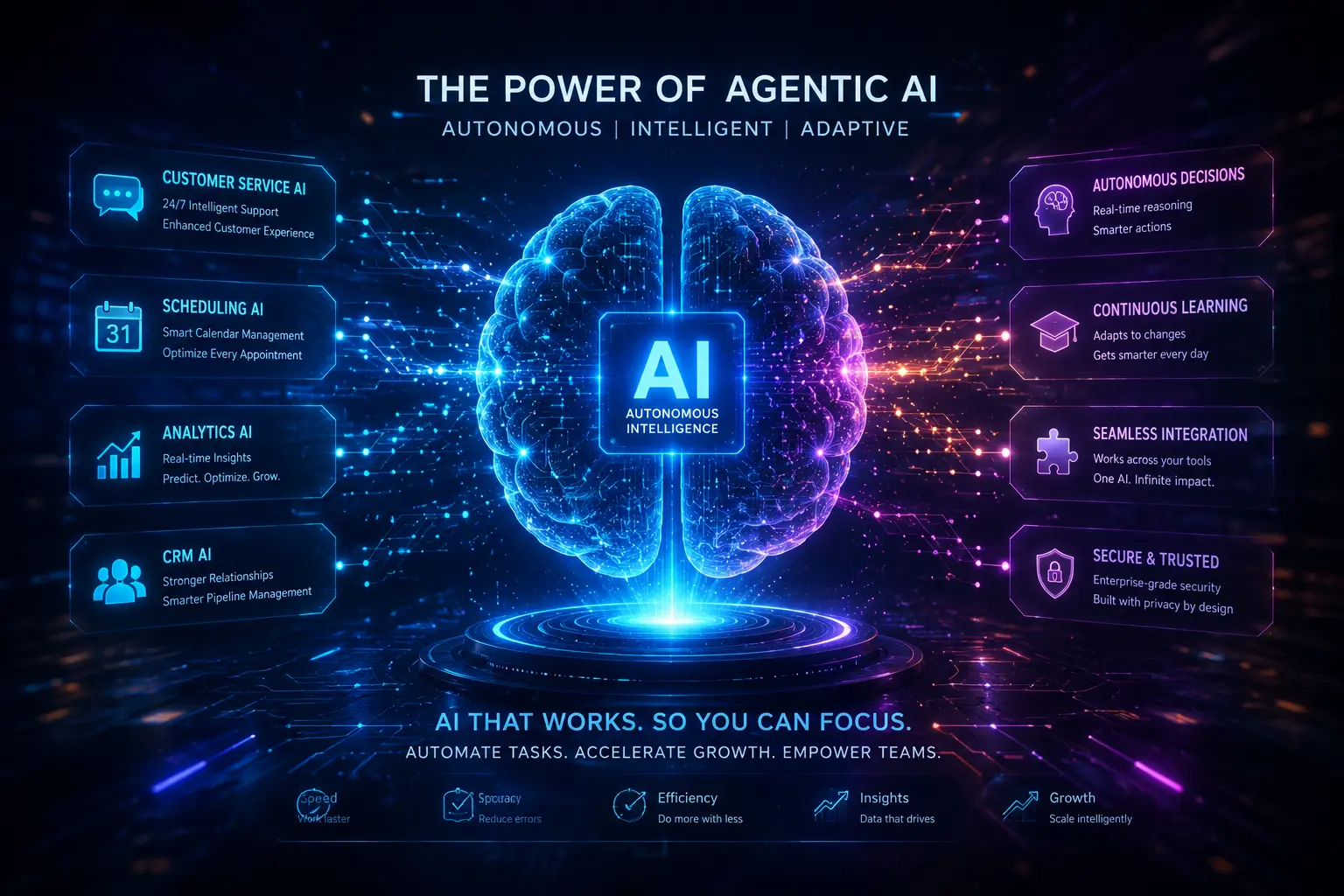
AI Agents
Businesses are moving beyond chatbots toward autonomous AI agents capable of completing multi-step workflows.
Personalized Customer Experiences
AI enables highly customized interactions at scale.
Multimodal Intelligence
Modern systems can work with text, images, audio, and video simultaneously.
AI-Powered Knowledge Management
Organizations are transforming internal knowledge bases into intelligent assistants.
Enterprise-Wide AI Integration
AI is increasingly embedded into existing business software rather than operating as a standalone tool.
These developments are pushing enterprise productivity to the next level.
Real-World Example
Imagine a mid-sized marketing agency with 100 employees.
Before AI:
- Teams manually created content drafts
- Customer reports required hours of preparation
- Internal documentation was difficult to maintain
After implementing OpenAI-powered workflows:
- Content production increased significantly
- Reporting became partially automated
- Employees spent more time serving clients
The agency didn’t reduce headcount.
Instead, it expanded capacity and improved profitability.
This reflects how many businesses are approaching AI adoption in 2026.
Expert Perspective
The most successful organizations aren’t viewing AI as a replacement for people.
They’re treating it as an amplifier of human capabilities.
Businesses that invest in employee training, governance frameworks, and responsible AI practices are seeing stronger long-term outcomes than those pursuing automation alone.
The companies staying ahead of the curve understand a simple truth:
Technology creates value when it empowers people.
Actionable Steps for Business Leaders
If you’re considering AI adoption, start here:
- Identify repetitive workflows.
- Prioritize high-impact business functions.
- Launch a small pilot project.
- Establish AI governance policies.
- Train employees effectively.
- Measure outcomes consistently.
- Scale successful initiatives gradually.
This approach reduces risk while maximizing business value.
Author’s View
Artificial intelligence is rapidly becoming a competitive advantage, and OpenAI is helping businesses turn AI from an emerging technology into a practical business tool. The biggest strength of OpenAI for Business is its ability to improve productivity across multiple departments—from customer support and marketing to sales, HR, and software development. Rather than replacing employees, OpenAI enables organizations to automate repetitive work so teams can focus on strategic decision-making, creativity, and customer relationships.
Businesses that combine AI with skilled employees, strong governance, and clear business objectives are likely to achieve the greatest long-term value. As enterprise AI continues to evolve, AI agents and intelligent workflow automation will play an increasingly important role in day-to-day operations. For US businesses looking to improve efficiency, reduce costs, and accelerate digital transformation, OpenAI for Business remains one of the most valuable AI platforms to evaluate in 2026.
Conclusion
OpenAI for Business is no longer an emerging concept. In 2026, it’s becoming a foundational component of modern business operations. From customer service and marketing to sales, HR, and analytics, AI is helping organizations operate faster, smarter, and more efficiently. The bottom line is simple: Businesses that learn how to combine human expertise with AI capabilities will be better positioned for growth in the years ahead. AI isn’t replacing successful companies. It’s helping them become more productive, innovative, and resilient. For leaders looking toward the future, that’s worth considering.

FAQ
What is OpenAI for Business?
OpenAI for Business refers to the use of AI-powered tools and technologies to improve productivity, automate workflows, enhance customer experiences, and support business growth.
How does OpenAI help increase productivity?
OpenAI automates repetitive tasks such as content creation, report generation, customer support, and information analysis, allowing employees to focus on strategic work.
Is OpenAI replacing human workers?
In most organizations, OpenAI is being used to augment human capabilities rather than replace employees. AI handles routine work while people focus on complex decision-making and creativity.
Which industries benefit most from OpenAI?
Technology, healthcare, finance, retail, manufacturing, marketing, education, and professional services are among the leading adopters.
What are the biggest risks of enterprise AI?
Common concerns include data privacy, security, accuracy, compliance requirements, and employee adoption challenges.
Is OpenAI suitable for small businesses?
Yes. Small businesses can use AI tools to improve efficiency, reduce costs, and compete more effectively with larger organizations.

SoftwareCompanyNearMe Editorial Team is dedicated to researching and publishing trusted content about U.S. software companies, SaaS platforms, artificial intelligence (AI), cloud computing, cybersecurity, and enterprise technology. Our goal is to help businesses, IT professionals, and software buyers make informed decisions through accurate, well-researched, and regularly updated technology guides, company reviews, and industry insights.
1 thought on “OpenAI for Business in 2026: Enterprise AI, Automation, Productivity, and Growth Explained”