
Patrick Stewart Brought Elegance to Star Trek as Jean-Luc Picard

Few television characters have represented intelligence, dignity, and thoughtful leadership as powerfully as Captain Jean-Luc Picard. For millions of Star Trek fans, the voice behind that character became just as unforgettable as the starship he commanded.
Sir Patrick Stewart brought something unusual to science fiction television. Instead of portraying a captain who depended on physical strength or constant displays of authority, he created a leader whose greatest strengths were intelligence, discipline, curiosity, and the ability to understand others.
His performance in Star Trek: The Next Generation transformed Captain Picard into one of the most recognizable characters in television history.
Stewart died on October 28, 2026, at the age of 86. His death was announced the following day. His career connected classical theater, blockbuster entertainment, and one of television’s most enduring science fiction franchises.
Patrick Stewart at a Glance
Full Name: Sir Patrick Stewart
Born: July 13, 1940
Birthplace: Mirfield, West Yorkshire, England
Known For: Captain Jean-Luc Picard
Major Television Role: Star Trek: The Next Generation
Other Iconic Role: Professor Charles Xavier in X-Men
Theater Background: Royal Shakespeare Company
Died: October 28, 2026, aged 86
How Patrick Stewart Changed Star Trek Forever
When Star Trek: The Next Generation premiered in 1987, the franchise was entering a new chapter. The original series had already established Captain James T. Kirk as an iconic science fiction hero, played by William Shatner.
Replacing that familiar character with an entirely new captain was a significant creative risk. Audiences had to accept a different personality, a different crew, and a different vision of the future.
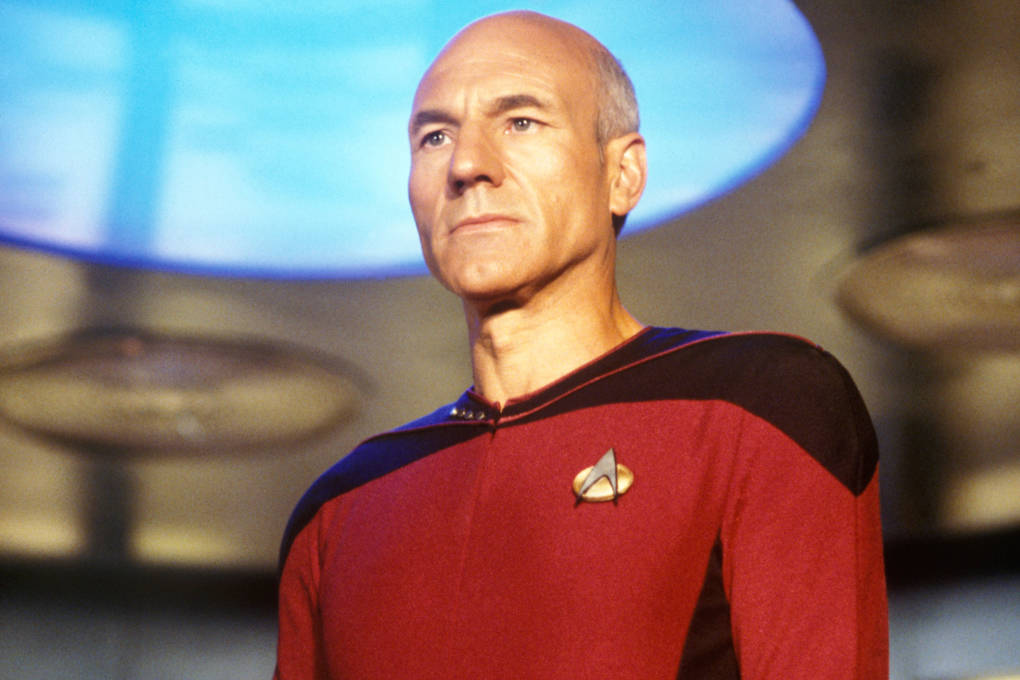
Stewart’s Jean-Luc Picard was very different from Kirk. He was measured, diplomatic, thoughtful, and often more interested in resolving a conflict through conversation than immediately turning to force.
His classical acting background gave the character a distinctive sense of authority. Even when Picard was discussing complicated philosophical questions or making difficult decisions, Stewart made the dialogue feel meaningful.

Captain Jean-Luc Picard: A Different Kind of Hero
Jean-Luc Picard was not designed as a conventional action hero. His defining qualities were patience, knowledge, emotional intelligence, and a deep belief in the value of human life.
As captain of the USS Enterprise-D, Picard was responsible for a crew exploring unfamiliar worlds, encountering new civilizations, and confronting situations that frequently challenged the values of the United Federation of Planets.
His decisions often involved questions that had no simple answers. Should an unfamiliar civilization be allowed to develop without interference? Can an artificial intelligence be considered a person? When does protecting others become an excuse for taking away their freedom?
These questions helped make The Next Generation more than a space adventure. It became a television series that used science fiction to examine real human problems.
Intelligence Over Aggression
Picard frequently attempted to understand a situation before deciding how to respond. He preferred diplomacy when possible but was never afraid to defend his crew or protect innocent lives.
This balance made him compelling. He could be calm without appearing weak and authoritative without becoming cruel.
A Leader Who Listened
Another important part of Picard’s personality was his relationship with his crew. He trusted talented officers, listened to their recommendations, and understood that leadership did not require knowing every answer.
His conversations with Commander William Riker, Data, Geordi La Forge, Dr. Beverly Crusher, Worf, and Counselor Deanna Troi helped establish the Enterprise as a community rather than simply a military-style command structure.
From Shakespeare to Science Fiction
Before becoming Captain Picard, Patrick Stewart had already established himself as a respected stage actor in Britain.
He spent many years working with the Royal Shakespeare Company, performing in productions that demanded a deep understanding of language, emotion, and character.
His experience with Shakespeare influenced the way he approached Picard. The character’s speeches often carried the seriousness of a theatrical monologue, but Stewart delivered them with enough restraint to keep them natural for television.
That combination of classical training and science fiction storytelling helped give The Next Generation its distinctive identity.

The Seven Seasons That Made Picard Legendary
Star Trek: The Next Generation ran from 1987 through 1994, completing seven seasons and 178 episodes.
During that time, Picard became the emotional and philosophical center of the series. The show introduced audiences to memorable characters, challenging moral questions, and some of the franchise’s most influential stories.
The series also earned major recognition, winning 18 Emmy Awards and a Peabody Award during its run.
The Measure of a Man
One of the most important episodes in the series is The Measure of a Man. It examines whether Data, an android serving aboard the Enterprise, should be recognized as an individual with rights.
Picard argues that Data is more than a machine that can be owned or dismantled. He challenges the assumption that intelligence and artificial life should automatically be treated as property.
The episode remains especially relevant as modern society debates artificial intelligence, machine intelligence, and the ethical responsibilities surrounding new technology.
The Best of Both Worlds
Another defining story is The Best of Both Worlds, which places Picard in the hands of the Borg, a technologically advanced collective that assimilates individuals into a shared consciousness.
The story tested Picard’s identity and leadership in a way that permanently changed the character. Stewart’s performance made the experience deeply personal rather than simply another science fiction battle.
Why Star Trek: The Next Generation Still Matters
The Next Generation was built around an optimistic vision of the future. Its universe imagined a humanity that had moved beyond many of its historical conflicts and developed a stronger commitment to cooperation, science, and exploration.
Picard embodied that philosophy. He believed that learning about other civilizations was more valuable than simply conquering new territory.
This approach made the series particularly distinctive during a period when many popular science fiction stories focused heavily on battles, weapons, and technological spectacle.
The Enterprise crew frequently faced difficult situations, but the most memorable victories often came through intelligence, empathy, and cooperation.

Patrick Stewart Beyond Captain Picard
Although Picard became his signature television character, Stewart’s career extended far beyond Star Trek.
One of his most recognizable roles outside the franchise was Professor Charles Xavier in the X-Men films.
Xavier was another character defined by intelligence, discipline, and a belief in peaceful coexistence. Like Picard, he was a leader who believed that people with different abilities and backgrounds could build a better future together.
Professor Charles Xavier in X-Men
In 2000, Stewart joined the X-Men film franchise as Professor Charles Xavier. The role introduced him to a new generation of movie audiences.
Xavier was a powerful mutant who believed that humans and mutants could coexist peacefully. His conflict with Magneto explored the difficult relationship between idealism, discrimination, fear, and power.
Stewart’s thoughtful performance gave the character the authority of a teacher and the emotional complexity of someone who had experienced years of conflict.
Returning to Jean-Luc Picard
Many years after The Next Generation ended, Stewart returned to his most famous role in Star Trek: Picard.
The series premiered in 2020 and ran for three seasons. It presented an older Jean-Luc Picard who had experienced significant personal and professional changes.
Instead of simply recreating the original television series, the show explored how the character had changed with time. His memories, relationships, regrets, and sense of responsibility became central parts of the story.
The final season also reunited several familiar members of the Next Generation crew, giving longtime fans an opportunity to see the characters together again.
Patrick Stewart’s Most Memorable Career Highlights
Major Roles and Achievements
- 1960s onward: Developed a distinguished career in British theater.
- 1966: Joined the Royal Shakespeare Company.
- 1987: Debuted as Captain Jean-Luc Picard.
- 1994: Completed the original seven-season run of The Next Generation.
- 1994–2002: Appeared in four Next Generation feature films.
- 2000: Began playing Professor Charles Xavier in X-Men.
- 2010: Received a knighthood for services to drama.
- 2020: Returned as Picard in the television series Star Trek: Picard.
- 2023: Published his memoir, Making It So.
What Made Patrick Stewart’s Acting So Special?
Stewart’s greatest strength was his ability to make complicated characters feel believable.
His voice carried authority, but his performances were not dependent on volume or dramatic gestures. A pause, a look, or a carefully delivered sentence could communicate more than an extended speech.
His classical training also allowed him to move between comedy, tragedy, drama, and science fiction without losing his identity as an actor.
Whether he was portraying a starship captain, a powerful mutant, or a Shakespearean character, he brought a distinctive combination of intelligence and emotional depth.
How Captain Picard Changed the Idea of Leadership
Picard’s popularity was not based only on his position as captain of a famous starship. His character represented a different approach to authority.
He believed that the best leaders should understand their responsibilities, listen to others, and make difficult decisions without losing their humanity.
- Listen before deciding: Good leadership requires understanding different perspectives.
- Respect individual freedom: People should not lose their dignity because they are different.
- Use knowledge wisely: Intelligence is most valuable when it helps solve problems.
- Take responsibility: Leadership means accepting the consequences of difficult decisions.
- Stay curious: Learning should never stop, regardless of experience or position.
Patrick Stewart’s Legacy in Modern Television
The success of The Next Generation helped establish that the Star Trek universe could thrive with an entirely new cast and a different creative direction.
The franchise later expanded through shows such as Deep Space Nine, Voyager, Enterprise, Discovery, and Strange New Worlds.
Each series developed its own identity, but the philosophical foundation established by The Next Generation remained an important part of the franchise.
Stewart’s performance also helped demonstrate that science fiction television could deliver serious dramatic acting and explore complex moral questions without sacrificing entertainment.
Why Fans Will Remember Captain Picard
For many viewers, Picard was more than a fictional television captain. He represented a version of the future worth believing in.
He was thoughtful when others were angry, curious when others were afraid, and determined to find peaceful solutions even when circumstances made that difficult.
His famous commands, including “Engage!” and “Make it so,” became recognizable expressions far beyond the television series.
Yet the character’s greatest legacy was not a catchphrase. It was the belief that strength and compassion could exist together.
Frequently Asked Questions About Patrick Stewart
1. Who was Patrick Stewart?
Patrick Stewart was a British actor best known for playing Captain Jean-Luc Picard in Star Trek: The Next Generation and Professor Charles Xavier in the X-Men films.
2. When did Patrick Stewart die?
Patrick Stewart died on October 28, 2026, at the age of 86. His death was announced on October 29.
3. What made Captain Picard so popular?
Picard became popular because of his intelligence, diplomatic leadership, thoughtful decisions, and commitment to understanding different civilizations.
4. How many seasons of Star Trek: The Next Generation did Patrick Stewart appear in?
Stewart starred in all seven seasons of Star Trek: The Next Generation, which ran from 1987 to 1994.
5. Did Patrick Stewart play Professor X?
Yes. He portrayed Professor Charles Xavier in the X-Men film franchise, beginning with the 2000 movie.
6. Did Patrick Stewart return to Star Trek?
Yes. He returned as Jean-Luc Picard in the television series Star Trek: Picard, which premiered in 2020 and ran for three seasons.
7. Was Patrick Stewart a Shakespearean actor?
Yes. Before becoming internationally famous through television and film, he developed a distinguished career in classical theater and was a member of the Royal Shakespeare Company.
8. What does “Make it so” mean in Star Trek?
It is one of Captain Picard’s best-known expressions, used when he instructs his crew to carry out a decision or command.
9. What was Patrick Stewart’s memoir called?
His memoir was titled Making It So: A Memoir and was published in 2023.
Final Verdict: The Captain Who Made the Future Feel Better
Patrick Stewart gave audiences a Captain Picard who was intelligent, disciplined, thoughtful, and deeply human. His performance helped transform Star Trek: The Next Generation into one of television’s most influential science fiction series.
His career was never limited to one character. From Shakespearean theater to the X-Men films and his return to the Star Trek universe, Stewart demonstrated a remarkable ability to bring depth to very different roles.
But Jean-Luc Picard will remain his defining legacy for millions of viewers. He showed that a fictional hero did not need to dominate every situation to command respect.
Sometimes the strongest person in the room is the one who listens, thinks carefully, and chooses compassion over conflict.
Patrick Stewart may be gone, but the captain he brought to life will continue to inspire generations of Star Trek fans.
This is an independently written editorial article about Patrick Stewart’s career and cultural legacy.
The New York Times – Patrick Stewart Brought Elegance to Star Trek as Jean-Luc Picard →
The Guardian – Patrick Stewart’s Star Trek and X-Men Legacy →
BBC – Patrick Stewart’s Acting Career →
Paramount+ – Star Trek: The Next Generation →
Image credits: The Patrick Stewart and Jean-Luc Picard images are sourced from third-party Star Trek editorial and fan-gallery websites. The images remain copyrighted by their respective owners. Obtain permission or verify commercial reuse rights before publishing.
Star Trek and its related characters are trademarks of their respective owners. SoftwareCompanyNearMe is not affiliated with Paramount or the Star Trek franchise.
Latest Entertainment & Technology Articles
Explore the latest gaming stories, artificial intelligence developments, entertainment technology, and digital trends from SoftwareCompanyNearMe.

GTA 6 Bugs List: 12 Glitches Players Have Reported So Far
Explore reported GTA 6 glitches, including NPC problems, floating objects, vehicle physics, and unusual map behavior.
Read Full Article →
Free GTA 6 Clipping Method: Create Viral Shorts Completely Free With AI
Discover how AI tools can help turn gaming footage into engaging vertical videos.
Read Full Article →
The $1,000 AI Stack: How Small U.S. Businesses Are Replacing Expensive Software With AI
Discover how small businesses can use AI tools to simplify operations and reduce software costs.
Read Full Article →
SoftwareCompanyNearMe Editorial Team is dedicated to researching and publishing trusted content about U.S. software companies, SaaS platforms, artificial intelligence (AI), cloud computing, cybersecurity, and enterprise technology. Our goal is to help businesses, IT professionals, and software buyers make informed decisions through accurate, well-researched, and regularly updated technology guides, company reviews, and industry insights.